Why Moving Damage Claims Matter More Than You Think
Moving brings excitement and stress in equal measure. Whether you’re relocating across London or shipping belongings internationally, protecting your possessions matters. At QuickShift Removals, we handle thousands of moves annually, and we understand that damage can happen despite the best efforts. This guide walks you through our damage claims and insurance process so you know exactly what to expect, what’s covered, and how we make resolution straightforward.
Damage during a move isn’t just inconvenient; it can be costly and emotionally frustrating. A cracked mirror, a dented bookcase, or water damage to a leather sofa represents more than the item itself. It’s a disruption to your fresh start, a delay in settling in, and often a financial loss you didn’t anticipate.
Most people assume moving damage is rare or that their household items are “just stuff.” But consider this: a single damaged antique piece, a broken appliance, or a scratched wooden floor can easily exceed thousands of pounds. Without proper insurance coverage, these losses fall entirely on you.
This is why understanding your coverage options before moving day matters so much. When you work with us, we make sure you’re protected at every stage. We’re transparent about what’s covered, what’s excluded, and how claims are handled quickly and fairly. Rather than discovering gaps in your protection after damage occurs, you’ll have clear answers upfront.
Our commitment starts with education. We want you to enter your move knowing your rights and protections, which reduces anxiety and keeps the focus on your relocation itself.
What to do next: Before your move, review your current household insurance policy. Check whether it covers items during transit and storage. Many standard policies have limited or no coverage for these scenarios, which is why we offer dedicated moving insurance options.
Understanding Your Coverage Options with QuickShift
We provide several insurance and protection options to suit different needs and budgets. Not every move requires the same level of coverage, so we’ve structured our offerings to give you choice.
Our main coverage tiers include:
Standard liability coverage comes with all our moves. This covers damage we cause through negligence, though it operates under strict legal limits. We’re responsible for our team’s actions, and this coverage protects you against basic liability scenarios.
Enhanced valuation is our mid-tier option. This extends beyond standard liability and covers items based on their declared value. You list your possessions and their replacement cost, and we insure them up to that amount. This is popular for residential moves where items have genuine monetary and sentimental value.
Full replacement coverage provides the highest protection. Under this option, we cover the full replacement cost of damaged items without depreciation. If a five-year-old sofa is damaged, you receive funds to buy a comparable new sofa, not a depreciated value. This appeals to those with valuable collections, expensive furniture, or who simply want comprehensive peace of mind.
Storage-specific coverage extends your protection if you’re using our secure storage solutions. Items held in storage are covered against theft, weather damage, and accidental damage during the storage period itself.
The coverage you choose depends on several factors: the value of your goods, whether you’re moving locally or internationally, how long items might sit in storage, and your risk tolerance. A family relocating within London with standard furnishings might feel comfortable with enhanced valuation. A business moving valuable equipment or artwork internationally would likely opt for full replacement coverage.
What to do next: List the high-value items you’re moving. Identify antiques, electronics, artwork, or collectibles. Once you know what needs protecting, contact our team to discuss which coverage tier makes sense for your situation. We can often bundle coverage with your move cost, spreading the expense across your overall relocation budget.
Our Comprehensive Valuation Process Explained
Before any claim can be settled fairly, we need to establish the actual value of what’s been damaged. This is where our valuation process becomes critical. A poorly conducted valuation can mean underpayment on legitimate claims, which isn’t fair to you or our business reputation.
Our approach combines professional assessment with transparency. When you arrange a move, we ask you to declare the value of your goods. We’re not just fishing for information; we’re establishing a baseline of what you’re telling us is important and why. For high-value items, we request documentation such as receipts, professional appraisals, or photographs.
If damage occurs, our valuation team assesses the item in question. They determine whether it’s repairable or a total loss. For repairable items, we obtain repair quotes from qualified professionals. For total losses, we research the current replacement cost for equivalent items. This isn’t about paying you what you paid five years ago; it’s about what it would cost to replace that item today.
For items without clear market value (custom furniture, gifts, inherited pieces), we work with specialists. We might engage an independent valuer, especially for items worth over a few thousand pounds. This additional step takes longer but ensures accuracy and removes any perception of bias.
Our system keeps detailed records. Every valuation decision, quote, and assessment is documented. If you disagree with our valuation, you have the right to request an independent assessment, which we’ll typically fund if it leads to a materially different figure.
What to do next: Photograph valuable items before your move. Take shots of condition, any wear, and items in situ in your current home. Save receipts for recent purchases and note any special circumstances (restoration work, recent repairs, professional appraisals). This documentation streamlines valuation if a claim becomes necessary.

Step-by-Step Guide to Filing a Damage Claim
The mechanics of filing a claim with us are designed to be simple and clear, removing bureaucratic friction.
Here’s how the process works:
Report damage immediately. Contact us within 48 hours of discovering damage, ideally while you’re still unpacking and the item is in your possession. We have a 24/7 customer support line for urgent matters. The sooner we know, the sooner we can assess and begin the resolution process.
Complete our damage claim form. This one-page document captures basic information: the item damaged, when you discovered it, how you believe it was damaged, and the value. You don’t need a perfectly detailed novel. A clear, concise description helps us process your claim quickly.
Submit supporting documentation. Attach photographs of the damage, the item if possible, and any relevant receipts or proof of value. If a professional appraisal exists, include that too. Digital submission is fastest; we can also handle paper copies, though digital speeds everything up.
Assign a claim handler. Once we receive your submission, a specific person becomes your point of contact. You’ll have their direct contact information and can ask questions throughout the process. No bouncing between departments or repeating yourself.
Schedule an assessment. Our assessment team will either inspect the item in person (for large furniture or fixtures) or work from your photographs and description (for smaller items). They’ll confirm the damage, determine repairability, and establish cost.
Receive a resolution. Based on the assessment, we’ll either arrange repair, approve a replacement, or issue a settlement payment. For repairs, we manage the contractor directly. For replacements, we guide you through the process. For cash settlements, payment typically arrives within 5 business days of claim approval.
What to do next: Save our damage claim form and support contact number in your phone. If damage occurs, report it immediately rather than waiting. Quick reporting gives us the best chance of assessing damage accurately while the move is fresh.
Documentation and Evidence Requirements for Success
Documentation is the backbone of any damage claim. It transforms a disagreement into a settled fact. The more evidence you provide upfront, the faster we can resolve your claim.
Essential documentation includes:
Photographs of damage should be clear, well-lit, and show the item from multiple angles. Include close-ups of the specific damage and wider shots showing context. If the item was in its original packaging or wrapping, photographs of the damaged packaging are valuable too.
Proof of value can take several forms. Receipts are ideal. If you no longer have the receipt, credit card statements, bank transfers, or invoices work well. For older items without original receipts, professional appraisals, insurance schedules, or valuations from specialists are helpful.
Condition documentation before the move strengthens your claim significantly. If you photographed items before packing and those photos show the pre-damage condition, it removes ambiguity. This is why we recommend documenting valuable items before moving day.
Expert assessments matter for high-value items. If an antique dealer, surveyor, or specialist appraised an item, that appraisal carries weight in our assessment. The more recent and detailed, the better.
Communication records can be useful too. If you asked our team to handle something carefully or gave specific instructions about an item, any email or message confirming that conversation supports your claim context.
You don’t need every piece of documentation for every claim. A straightforward damaged lamp might require just a photo and a receipt. A damaged piece of artwork might warrant professional appraisals and conservation assessment. We assess what’s reasonable based on the claim’s complexity and value.
What to do next: Before your move, compile a digital folder with photographs and documentation for your highest-value items. Store this safely with your moving paperwork. When you arrive at your destination, take a quick photographic inventory of received items in their current condition. This creates a baseline should any claim arise later.
Timeline and Settlement Expectations
Understanding how long claims take helps you plan and reduces frustration. Transparency about timeline is part of our commitment to you.
For straightforward claims (minor damage with clear documentation and photographs), we typically reach a decision within 7-10 business days. Once approved, payment or repair arrangements happen immediately. A cracked mirror or a dented door might fall into this category.
Claims requiring professional assessment take longer, usually 10-14 business days. Our assessment team needs to inspect the item, potentially obtain repair quotes, and document their findings. You’ll be updated as the assessment progresses.

Complex claims involving valuable items, specialized assessment, or dispute about the damage extent can take 14-28 business days. We might engage independent valuers or conservators. These cases warrant careful attention, and we won’t rush a decision that affects a significant value.
Throughout the process, you’ll have visibility. Your claim handler sends status updates every 3-5 days. You can contact them anytime with questions. We won’t leave you wondering where your claim stands.
Payment timing depends on claim type. Cash settlements are processed within 5 business days of approval. Repair jobs are coordinated directly with contractors, and timelines depend on the repair complexity. Replacement purchases vary based on item availability.
Realistic example: You report a damaged dining table on a Monday. We provide you a claim form and request photographs. You submit everything by Wednesday. Our assessment team reviews it Thursday and schedules an in-home inspection for Friday. The inspector assesses the damage, determines it’s repairable, and obtains a repair quote. By the following Tuesday, we approve the repair and schedule it for the following week. Total time from report to repair completion: about two weeks. Payment would be made directly to the repair contractor or to you, depending on your preference.
What to do next: When you report damage, ask your claim handler for a realistic timeline estimate based on your specific claim. Confirm preferred contact methods and response time expectations. Clear communication from the start prevents misunderstandings later.
How We Prevent Damage Before Claims Arise
The best claim is one that never needs to be filed. This is why damage prevention is central to everything we do at QuickShift Removals.
Our packing standards are rigorous. Fragile items receive specialist packing with bubble wrap, foam, and custom crating for high-value pieces. We don’t skimp on packing materials; we invest in them because it protects both your goods and our liability. Electronics are wrapped in static-reducing materials. Artwork is secured with museum-quality wrapping. Furniture is padded and protected with moving blankets.
Vehicle maintenance is non-negotiable. Every removal van undergoes regular safety and condition checks. Worn suspension, poor brakes, or unstable cargo spaces increase damage risk. We keep our fleet modern and well-maintained specifically to provide smooth, stable transport.
Our team training emphasizes care. Removers understand the value of what they’re handling, both monetarily and emotionally. They’re trained on how to lift, carry, and secure items properly. We don’t treat your sofa like a box of books. Different items require different handling approaches, and our team knows this.
Route planning matters too. We avoid excessive speed, bumpy roads when smoother alternatives exist, and overly steep inclines when possible. For international moves, we select carriers and routes with strong safety records.
Environmental controls in our storage facilities protect goods from temperature fluctuations, humidity, and weather exposure. Items stored with us aren’t left in an uncontrolled warehouse; they’re in climate-managed space with security monitoring.
Communication during your move is continuous. You receive updates, photographs, and notifications at key stages. If anything seems amiss during transit, we address it immediately rather than discovering problems at the destination.
What to do next: When booking your move, discuss your most valuable or fragile items with our team. Ask about specialized packing for those pieces. We often recommend upgrade services for high-value goods, and it’s worth considering. A few pounds spent on specialist packing can prevent thousands in potential claims.
Your Rights and Our Commitment to Resolution
You have legal rights as a customer of a removal company. We recognize these rights fully and structure our process around them. Understanding these protections empowers you throughout your move.
You have the right to full transparency about coverage limits before your move. We won’t surprise you after damage occurs with unexpected exclusions. Everything is explained upfront, and you approve coverage before we transport your goods.
You have the right to a fair valuation. If you disagree with how we’ve valued an item or assessed damage, you can request an independent assessment. We’ll respect that decision, and if the independent assessment materially differs from ours, we’ll typically fund the assessment and adjust our settlement accordingly.
You have the right to a timely response. We commit to acknowledging damage claims within 24 hours and providing a decision timeline within 48 hours. Waiting months for a claim decision isn’t acceptable, and we don’t do it.
You have the right to dispute our decision. If you believe our assessment or settlement is unfair, you have formal avenues to contest it. We have an internal appeals process, and ultimately, you can pursue resolution through independent dispute resolution services or legal channels if necessary.
You have the right to alternative remedies. If repair takes time, we can discuss rental solutions for essential items. If a replacement isn’t immediately available, we can advance credit or arrange interim solutions.
Our commitment extends beyond these minimum rights. We commit to treating every claim seriously, whether it’s a five-pound item or a five-thousand-pound piece. We commit to honest assessment and fair settlement. We commit to being your advocate, not an obstacle, when resolving damage.
Our reputation depends on claims being resolved fairly. We’ve been in the removal business long enough to know that unhappy customers talk, and nothing damages trust faster than perceived unfairness in claims handling.
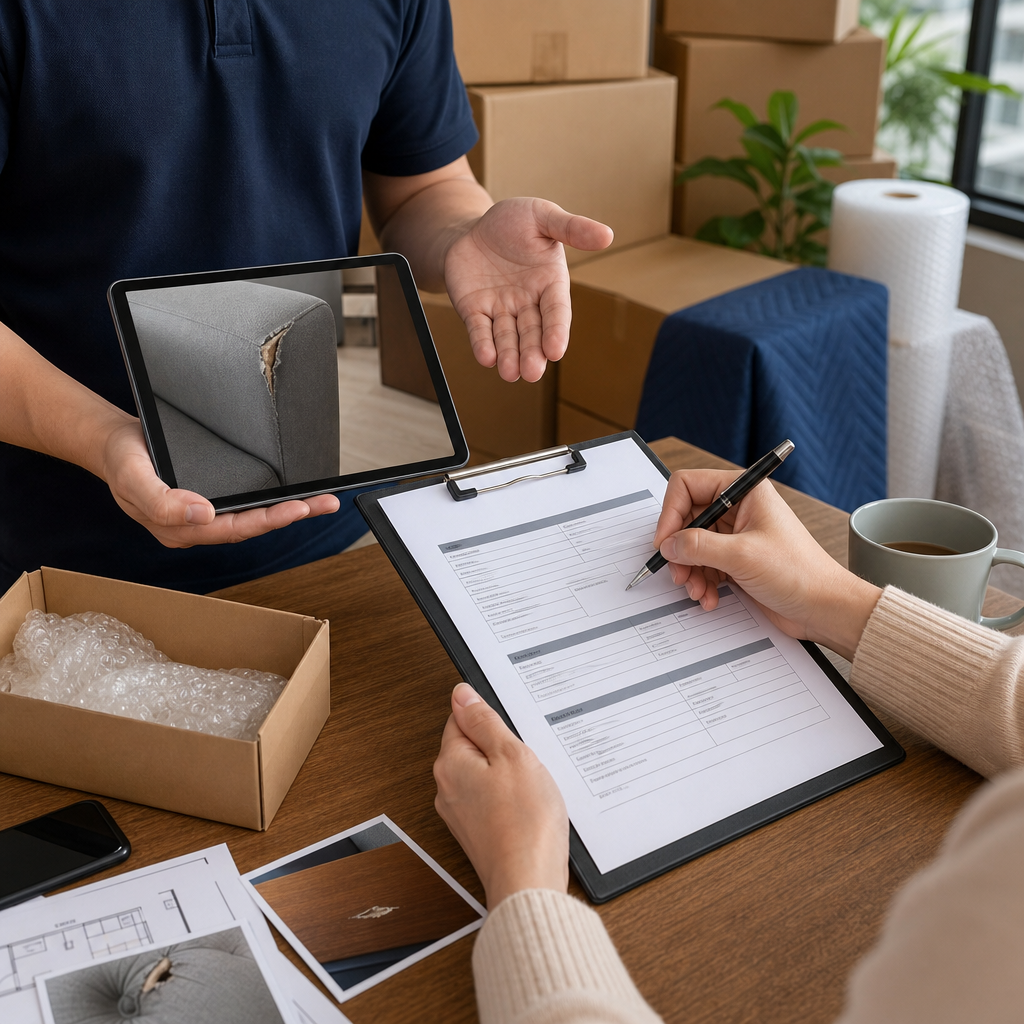
What to do next: Before your move, ask us to provide a written summary of your coverage, limits, and your rights. Keep this document with your other moving paperwork. Review it occasionally so you’re clear on your protections. If any aspect is unclear, call us to discuss. We’d rather answer questions upfront than resolve disputes later.
Common Damage Scenarios and Coverage Details
Knowing how different types of damage are handled gives you concrete understanding of your protection. Let’s walk through realistic scenarios.
Furniture damage is common. A sofa gets a tear during unloading. A wooden table develops a gouge when a moving jack slips. A bed frame breaks when squeezed through a doorway. Under our standard liability, we cover damage caused by our team’s negligence. Under enhanced or full replacement coverage, furniture damage is covered regardless of cause. Assessment involves determining whether repair or replacement is more economical. We’ll arrange upholstery repair for the sofa, wood restoration for the table, or a new frame for the bed, depending on the damage extent and your coverage level.
Appliance damage includes broken dishwashers, damaged refrigerators, or malfunctioning ovens. If an appliance worked fine before the move and doesn’t work after, we cover it under our insurance. Assessment includes testing whether it’s repairable or requires replacement. For many appliances, manufacturer’s guarantees don’t cover transport damage, so our coverage is your protection.
Water or weather damage occurs less frequently but can be severe. Goods damaged by leaking roofs during storage or water exposure during transit are covered if they’re being stored with us or under our full replacement coverage. Weather damage is typically covered under enhanced and full replacement tiers but not standard liability.
Loss or missing items are serious and covered under our liability. If a box of items goes missing or items disappear from storage, that’s covered (theft by third parties is covered separately from accidental loss). We’ll need proof of what was in the box or missing item, which is why keeping inventory lists is valuable.
Damage during storage is covered if you’re using our storage facility. Items we’re holding are protected against theft, weather, accidental damage, and environmental issues. Coverage extends as long as items are in our storage.
Artwork and collectibles require specialized assessment. We often recommend professional conservation assessment if damage occurs. Coverage is typically full, but the valuation process requires specialist expertise, which extends the timeline.
High-tech equipment and electronics need careful handling. Damage during transit or storage is covered, but we may require professional technical assessment to confirm the damage is related to the move and not pre-existing malfunction.
What to do next: Think through your move and identify which scenarios concern you most. Are you moving expensive artwork? A full kitchen of high-end appliances? Antique furniture? Once you’ve identified your risk areas, discuss them with our team when booking. We can recommend appropriate coverage and specialized packing for those specific items.
Templates and Resources to Streamline Your Claim
We provide tools and templates to make claiming straightforward. Having these resources ready means you’re prepared if damage occurs.
Our damage claim form is simple and clear. It’s a single page capturing essential information: what’s damaged, when discovered, how damaged, and approximate value. We provide this both in hard copy (in your moving pack) and digitally on our website. Completing it takes five minutes.
A pre-move inventory checklist helps you document goods before transport. You walk through your home photographing items and noting condition. We provide the template; you fill it in. This takes an hour but creates invaluable documentation if a claim arises later.
Our valuation guide helps you estimate the value of items you’re moving. It breaks items into categories and provides guidance on realistic current values. Using this guide means you won’t significantly over or underestimate your goods’ value.
A photography guide explains how to photograph damage and items for claim purposes. Good photographs make claims faster. Our guide shows you what angles, lighting, and detail level work best.
Our contact and documentation template provides a framework for keeping records during your move. You note what’s packed when, which vehicle it goes in, and who handled it. If a claim arises, this creates a clear record of the item’s journey.
We provide a claim deadline reminder. You have time limits to report damage, though not an unreasonable timeframe. Our template reminds you when deadlines approach.
You can access all these resources through our moving solutions. We also provide them in your moving pack, and our team can email them on request. Having them saved or printed before your move means you’re prepared if needed.
What to do next: Download our pre-move inventory checklist and photography guide right now, before your move is booked. Review them so you understand what documentation helps claims move quickly. Use the checklist during your packing process; don’t wait until something is damaged to think about documentation.
Moving involves thousands of decisions and logistics. Damage and insurance shouldn’t be sources of anxiety because we’ve made the process transparent and straightforward. You now understand our coverage options, valuation process, claims timeline, and your rights. You know how we prevent damage and what documentation makes claims faster.
If you have specific questions about your move or coverage needs, our support team is ready to help. Whether you’re relocating locally in London or internationally, protecting your goods matters, and we’re here to ensure you’re properly covered.
For further reading: Moving with QuickShift FAQ.