
1. Photographic Evidence Before Moving Day Begins
Moving involves multiple high-touch moments where your belongings can be damaged: during packing, transport, storage, or unpacking. When damage occurs, your ability to prove exactly what happened and what condition items were in beforehand determines whether an insurance claim succeeds or fails. We’ve handled thousands of relocations and seen firsthand how proper documentation separates straightforward claim approvals from lengthy disputes.
This guide walks through seven practical damage documentation practices that protect your interests during a move. Whether you’re relocating locally in London or shipping items internationally, these methods create an undeniable record that holds moving companies and insurers accountable.
The single most powerful piece of damage documentation is a photograph taken before any moving activity starts. A photo is objective proof of condition at a specific moment in time. Unlike verbal descriptions, images leave no room for interpretation or disagreement.
Start taking photos at least one week before moving day. Capture each room from multiple angles, focusing on items you’re most concerned about: furniture with delicate finishes, electronics, artwork, and anything with existing minor damage. Close-up shots of any pre-existing scratches, dents, or wear patterns are especially valuable. If an item arrives with a new scratch, you need proof that it didn’t already exist.
Don’t just photograph individual items in isolation. Take environmental photos showing how furniture fits in your current space, how displays are arranged, and where items sit relative to walls and other objects. This context matters if you later need to explain how an item could have been damaged during handling.
Pay particular attention to fragile categories:
- Mirrors, glass tops, and artwork without protective coverings
- Electronics in their current setup with visible cables and connections
- Wooden furniture showing grain, patina, or finish quality
- Upholstered pieces with textile color and condition detail
- Appliances displaying current operational status
- Any items already showing wear or previous damage (these need clear documentation so new damage isn’t confused with old)
For valuable items worth over 500 pounds, consider photographing both the item and a close-up detail showing any identifying marks, maker labels, or serial numbers. This prevents disputes about whether the item you’re claiming is actually the item you shipped.
Actionable next step: Set a reminder to photograph your home at least five days before your scheduled move. Use natural daylight if possible, take multiple angles, and ensure dates are visible in photo metadata (most modern phones do this automatically). Store originals in cloud storage as backup.
2. Video Walkthroughs of Your Property and Belongings
Still photographs freeze individual moments, but video captures context, movement, and spatial relationships that matter in damage claims. A video walkthrough shows the actual state of items as they sit in your home and provides an undeniable record of what was there and its condition.
Record a continuous video sweep through each room. Move slowly enough that items are clearly visible, but quickly enough that you’re covering the full space. Narrate as you film: “Master bedroom, mahogany bed frame with no visible damage, cream bedding, wooden nightstands with lamps.” This audio commentary ties specific items to specific rooms and conditions, which helps insurers and moving company investigators quickly locate relevant items in the footage.
Pay special attention to items that receive stress during moving: furniture legs and frames (where scratches appear first), corners and edges of boxes, undersides of items that experience friction during loading, and electronic devices with delicate components. Zoom in briefly on any existing damage so the timestamp and zoom-in point become part of the record.
For high-value items or collections, record detail-focused sequences. A video of a china cabinet showing each shelf, the condition of each piece, and how items are packed inside takes seconds to record but provides invaluable evidence. Similarly, film electronics powered on (if relevant) to show they function before the move.
The advantage of video over still photos: it’s harder to challenge. A moving company can theoretically claim you misidentified which scratches were pre-existing in photographs. But a continuous video walkthrough with your narration leaves almost no room for such disputes.
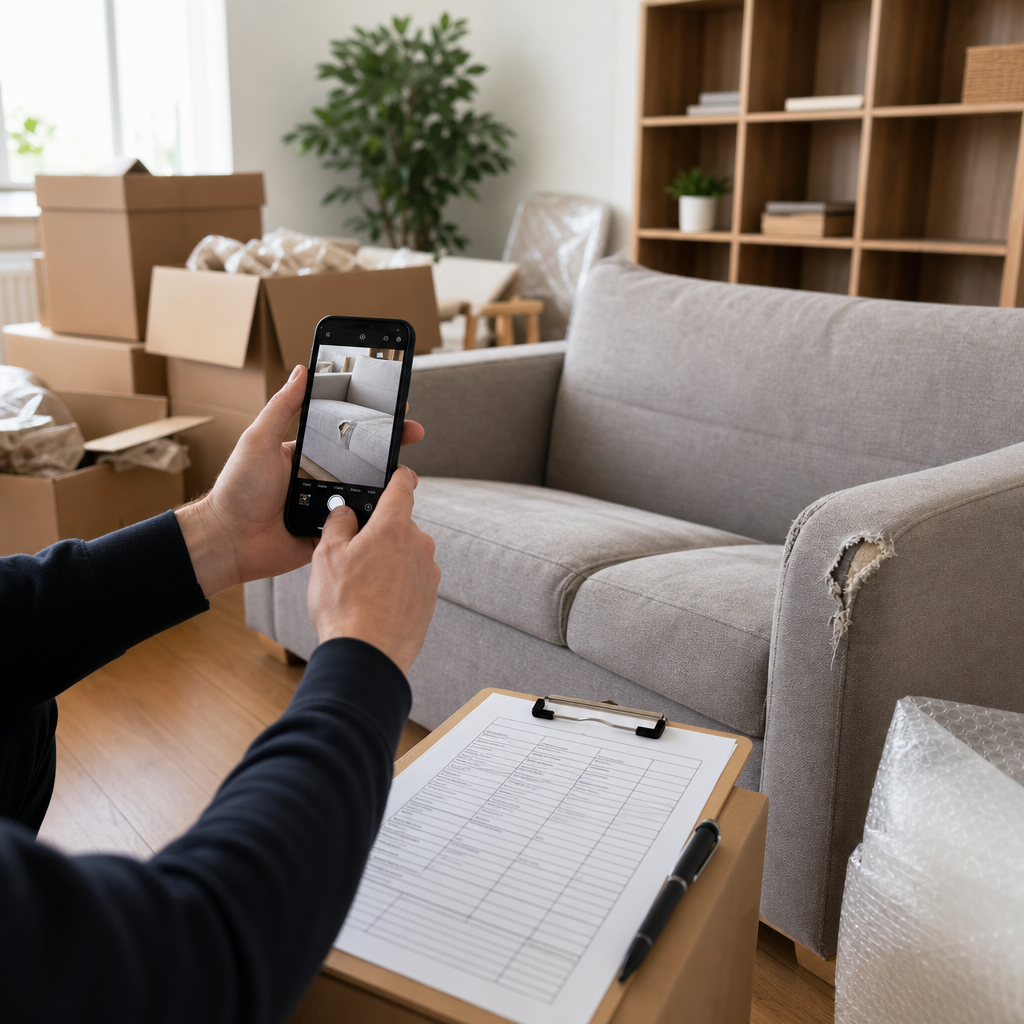
Actionable next step: Use your smartphone to record a 10-15 minute walkthrough of your property. Speak as you film. Upload the file to secure cloud storage (Google Drive, OneDrive, iCloud) immediately after filming so you have both a local copy and an offsite backup.
3. Detailed Inventory Lists with Item Descriptions
Written inventory documentation serves a different purpose than photos and videos: it creates a searchable record and forces you to be specific about what’s being moved. Vague descriptions like “furniture” or “boxes of household items” make it nearly impossible to verify damage claims later.
Create an inventory that lists each significant item alongside a brief description of its condition. Format it as a simple table or numbered list:
- Item: Leather sectional sofa / Description: Dark brown, L-shaped, no visible tears or stains, small scratch on left armrest near seam / Photo reference: IMG_2847, IMG_2848
- Item: 42-inch flat-screen television / Description: Samsung UE42, in original box, tested and powered on without issue / Photo reference: IMG_2901
- Item: Dining table and six chairs / Description: Solid oak, rectangular, seats 6, minor surface scratches on underside of table / Photo reference: IMG_3012-3018
- Item: Box of kitchen glassware / Description: Approximately 40 glasses, bowls, and serving pieces, mostly unbroken, one water glass with small chip on rim / Photo reference: IMG_3024
The key is matching each item to its photographic evidence. This cross-referencing proves you documented the item’s condition methodically rather than randomly grabbing photos. When you submit a claim, you can point to the specific photo that backs up your description.
For items being stored, create a separate inventory dedicated to storage contents. Include the box or container number, what’s inside, and condition notes. This becomes essential if damage occurs while items sit in a storage facility.
Digital formats work better than paper. Use Google Sheets, Excel, or even a simple Google Doc so you can add notes, update statuses, and access the document from any device. Include a timestamp showing when you created the inventory (ideally within your pre-move documentation window).
Actionable next step: Spend 30 minutes creating a basic inventory list covering your 10-15 most valuable items. For each entry, note the item, a condition description (or note “no visible damage”), and the date you photographed it. This doesn’t need to be exhaustive, just comprehensive for items you’d actually claim.
4. Professional Condition Reports from Your Moving Company
Here’s where we at Quickshift Removals add measurable value to your damage protection strategy. Our professional condition reports, completed by trained crew members on moving day, create an independent third-party record of item conditions at the moment they’re loaded.
When you book a move with us, our team conducts a pre-move walkthrough and documents the condition of items being transported. This is different from your personal documentation because it comes from a neutral party trained to spot and record damage consistently. If a dispute later arises about whether damage was pre-existing or caused during transport, our crew’s notes carry significant weight with insurers.
Our condition report approach includes:
- Item-by-item condition notation by the moving crew
- Photographic documentation taken by our staff (adding a second photographic perspective)
- Notes on any items that show existing damage or require special handling
- Timestamps recorded at the point items are loaded
- Crew member signatures confirming their observations
We provide you with a copy of this report before loading begins. You review it, verify accuracy, and sign off if you agree. This creates a binding baseline that protects both you and us. If damage occurs during transport, you have documentation from our trained crew establishing initial condition.
The practical benefit: insurers take third-party documentation seriously. If you submit only your own photos, an insurer might question whether you took them accurately or fairly. When you submit your documentation alongside our professional condition report, the case becomes much stronger. You’ve got two independent records of pre-move condition, and we’ve got crew notes about handling, which either confirms safe transport or reveals where issues occurred.

We recommend reviewing our removals and storage services to understand how professional documentation is built into our moving process. Our team also provides moving damage FAQs that explain how our documentation practices protect your claims.
Actionable next step: When booking your move with us or any moving company, explicitly request a pre-move condition report and confirm it will be provided in writing before loading. Ask how the report is documented (photos, written notes, digital record) and whether you receive a copy to keep.
5. Timestamp Documentation and Damage Notation Systems
Timing matters in damage claims. An insurer wants to know exactly when damage occurred because it determines liability. Was the item damaged before the move, during loading, in transit, during unloading, or in storage? Each scenario involves different parties potentially responsible.
Establish a dating system for all your documentation. Most modern smartphones automatically embed timestamps in photos and videos, but verify this is turned on in your phone settings. The metadata shows the exact date and time of capture.
For your written inventory and any notes you add during the move, include explicit dates and times. Instead of “damaged mirror,” write “damaged mirror, first observed 14 March 2026, 2:15 PM, during unpacking at new property.” This precision is critical.
Create a damage notation system for items that arrive with damage. As soon as items are unloaded, conduct a quick inspection (or do it within 24 hours if you can’t immediately). For any item showing new damage, create a note with:
- Item name and identifying details
- Date and time of damage discovery
- Description of the damage (scratches, dents, cracks, functionality issues)
- Photograph of the damage with visible timestamp or reference to timestamped photo
- Location on the item (e.g., “scratch on front left corner of sofa frame”)
- Estimate of damage severity (cosmetic, affects functionality, renders item unusable)
Keep this running list in a single document so everything’s in one place. Add items chronologically as you discover damage. This creates an undisputed timeline.
For items in storage, timestamp your inspections. If you’re paying for storage and want to check on items mid-storage period, visit the facility, photograph condition, and document the date. If damage appears between your last visit and final collection, you’ve got proof of when it occurred.
Actionable next step: Create a “Damage Log” document on your computer or phone’s notes app now, before moving day. Add column headers: Item Name, Date Discovered, Time Discovered, Damage Description, Photo Reference, Severity. You’ll use this immediately if any damage occurs.
6. Insurance Policy Review and Coverage Verification
Documentation is only useful if you understand what your insurance actually covers. Many people assume their homeowner’s or renter’s insurance covers moving damage, only to discover it doesn’t. Other policies include moving coverage but with specific limits or exclusions.
Review your insurance policy at least two weeks before moving day. Find the section covering transit and relocation. Look for:
- What types of damage are covered (accidental damage, transit damage, storage damage)
- What’s excluded (fragile items, electronics, high-value items, items damaged by your own negligence)
- Coverage limits (do you have a 2,000-pound total limit, or per-item limits)
- Deductibles (what you pay out-of-pocket)
- Claims procedures (what documentation they require, claim deadlines)
If your current policy has gaps, check whether you can add a moving rider or temporary coverage for the relocation period. Some insurers offer this affordably.
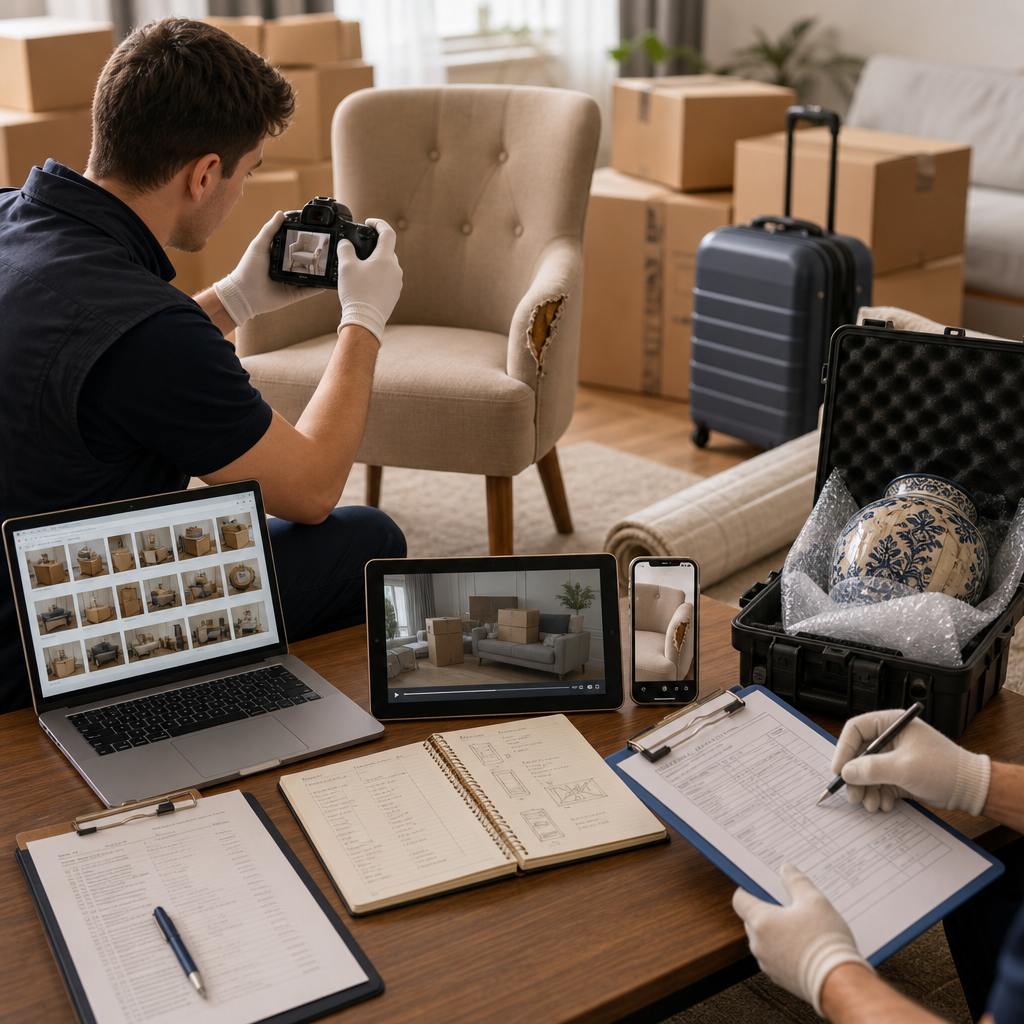
Many moving companies, including Quickshift Removals, carry professional liability insurance that covers damage we cause during transport. We’re required to do this by law. However, our liability limits may not equal your items’ full value. Check your moving company’s insurance information and ask what they cover and to what extent.
Consider supplemental insurance if you’re moving high-value items, overseas, or items with particular risk. Some moving companies offer damage waivers; we can advise you on this when you book. The cost of supplemental coverage is often minimal compared to the protection it provides.
Actionable next step: Contact your insurance provider this week and ask: “What damage does my current policy cover if items are damaged during a move?” Request written confirmation via email. If coverage is limited, ask about adding a moving rider. Save this correspondence for your records.
7. Third-Party Inspection Services for High-Value Items
For items worth over 2,000 pounds individually, or if you’re moving a high-value collection, third-party inspection provides the strongest possible documentation. These independent experts assess condition before and after moving, creating professional appraisals that insurers rely on.
High-value items qualifying for third-party inspection include:
- Fine art and antiques
- Jewelry and watches
- Vintage furniture or designer pieces
- Musical instruments
- Collections (books, stamps, coins, memorabilia)
- Electronics and equipment with high replacement costs
- Vehicles or motorcycles
The process works like this: You hire an appraiser licensed in your region. They visit your home before the move, examine each high-value item in detail, take professional photographs, note condition, and prepare a written appraisal including estimated replacement value. This appraisal serves dual purposes: it documents pre-move condition and establishes the item’s value for insurance purposes.
After moving, you can request a post-move inspection. The appraiser re-examines items, compares conditions, and documents any changes. If damage occurred, the appraisal clearly shows when it happened (between pre-move and post-move inspections) and the cost of damage relative to the item’s original value.
The cost of third-party inspection ranges from 150-500 pounds per item depending on complexity and location. For items worth 5,000 pounds or more, this investment is worthwhile. If damage occurs, having professional documentation dramatically increases your recovery.
Our moving solutions team can recommend qualified appraisers in the London area and advise you on which items justify third-party assessment. We handle many high-value relocations and understand which items are most at risk and most worth formally documenting.
Actionable next step: If you own items worth over 2,000 pounds, search for “art and antique appraisers” or “fine goods inspectors” in your London postcode area. Get quotes from two to three providers and ask what their pre- and post-move inspection packages include. Budget 300-500 pounds for comprehensive assessment of your highest-value items.
—
Building an airtight damage documentation record takes discipline, but it transforms how insurance claims are resolved. The moving companies and insurers you deal with process hundreds of claims annually. Those claims supported by professional condition reports, timestamped photos, inventory documentation, and third-party appraisals get approved quickly. Claims without documentation get delayed, disputed, or denied.
At Quickshift Removals, we integrate professional condition reporting into every move we handle. Our crew documents pre-move conditions, handles items with care, and provides you the third-party documentation that backs your claims. When you combine our professional practices with your own thorough pre-move documentation, you’ve created comprehensive protection for your belongings.
Start your documentation process two weeks before moving day. Photograph everything, create written inventories, review insurance coverage, and book your move with a company that takes damage prevention and documentation seriously. We’re here to help protect your move from start to finish.