
Why Weather, Strikes, and Bank Holidays Disrupt Your Moving Plans
Three factors regularly complicate moving timelines in the UK, and they rarely announce themselves politely.
Bad weather affects every phase of your move. Heavy rain damages cardboard boxes and creates slip hazards for our teams. Snow and ice make roads treacherous, forcing vehicles to slow down and increasing travel time by 30-50%. Flooding in certain areas can close routes entirely, leaving your belongings stranded mid-journey. Wind speeds above 40mph become a safety concern when loading and unloading, particularly in London’s dense urban environment where buildings create unpredictable gusts.
Transport strikes have become increasingly common across the UK logistics sector. When rail networks, port facilities, or fuel distribution systems halt, road transport becomes bottlenecked. Even if we operate our own vehicles, secondary strikes affecting fuel supply chains or traffic control can delay progress. International moves depend on coordinated transport across multiple countries, making strike disruption exponentially more complex.
Bank holidays represent a genuine scheduling friction point. Festive periods see reduced availability for roads, port facilities, and storage warehouses. Staff capacity tightens, and client availability narrows simultaneously. A move scheduled across a bank holiday weekend often requires rescheduling unless your moving company has built flexibility into their operations.
The common thread: these disruptions demand advance planning, real-time responsiveness, and backup systems. Companies that treat them as rare exceptions typically find themselves scrambling when they occur.
The Hidden Costs of Unprepared Moves During Disruptions
The bill for poor contingency planning extends far beyond a delayed delivery date.
When a moving company lacks weather protocols, your belongings face tangible damage. Unsealed boxes in rain absorb moisture, leading to warped furniture, water-damaged documents, and mold growth that sometimes doesn’t appear until weeks after delivery. A family piano that costs 8,000 pounds to restore from water damage represents the true cost of cutting corners during bad weather. Replacing electronics damaged by moisture quickly exceeds 2,000-3,000 pounds.
Unplanned delays create cascading costs. If your move gets pushed back two weeks due to a transport strike you weren’t prepared for, you may be on the hook for extended hotel accommodation, missed work productivity, and missed school deadlines for children. Commercial clients face inventory costs for goods in transit, lost sales from delayed office setups, and payroll expenses for non-productive staff. A small business relocation delayed by a strike can cost 5,000-15,000 pounds in indirect expenses.
Strikes also expose moving companies without backup logistics to sudden price spikes. When primary transport routes close, alternative options become scarce and expensive. Smaller operators may simply cancel your move, forcing you to scramble for alternative service at premium rates or face further delays.
Poor communication during disruptions multiplies stress. Without transparent updates about your move’s status and revised timelines, you’re left anxious and unable to manage your own schedule. Families can’t confirm arrival times at new homes, and businesses can’t brief teams on office relocation dates.
Bank holiday disruptions create a sneakier cost: rushed rebooking. When forced to reschedule around a bank holiday, available slots fill quickly at higher prices. Delaying your move beyond your preferred timeframe can mean paying premium rates or accepting suboptimal timing.
Our Multi-Layered Contingency Planning Process
We approach contingency planning by identifying risk points across your entire move and building buffers at each stage.
Our process begins before we ever confirm your moving date. We analyze your specific route, origin, and destination against historical disruption data. If you’re moving from central London to Manchester, we review seasonal weather patterns for that corridor, check union activity schedules at relevant transport hubs, and identify alternative routes that avoid known bottleneck areas.
We then build a three-tier contingency framework: primary plan, secondary plan, and emergency protocols.
Your primary plan reflects the most likely scenario based on current conditions and forecasts. This includes our preferred route, scheduled team assignments, and target delivery dates. We communicate this clearly so you know what to expect.
Our secondary plan activates based on developing conditions. If a weather forecast shifts or strike notices emerge, we pivot without waiting for a crisis. This might mean adjusting departure times, switching to alternative transport routes, or proposing revised delivery windows. We present these changes to you with clear reasoning and timeline implications.
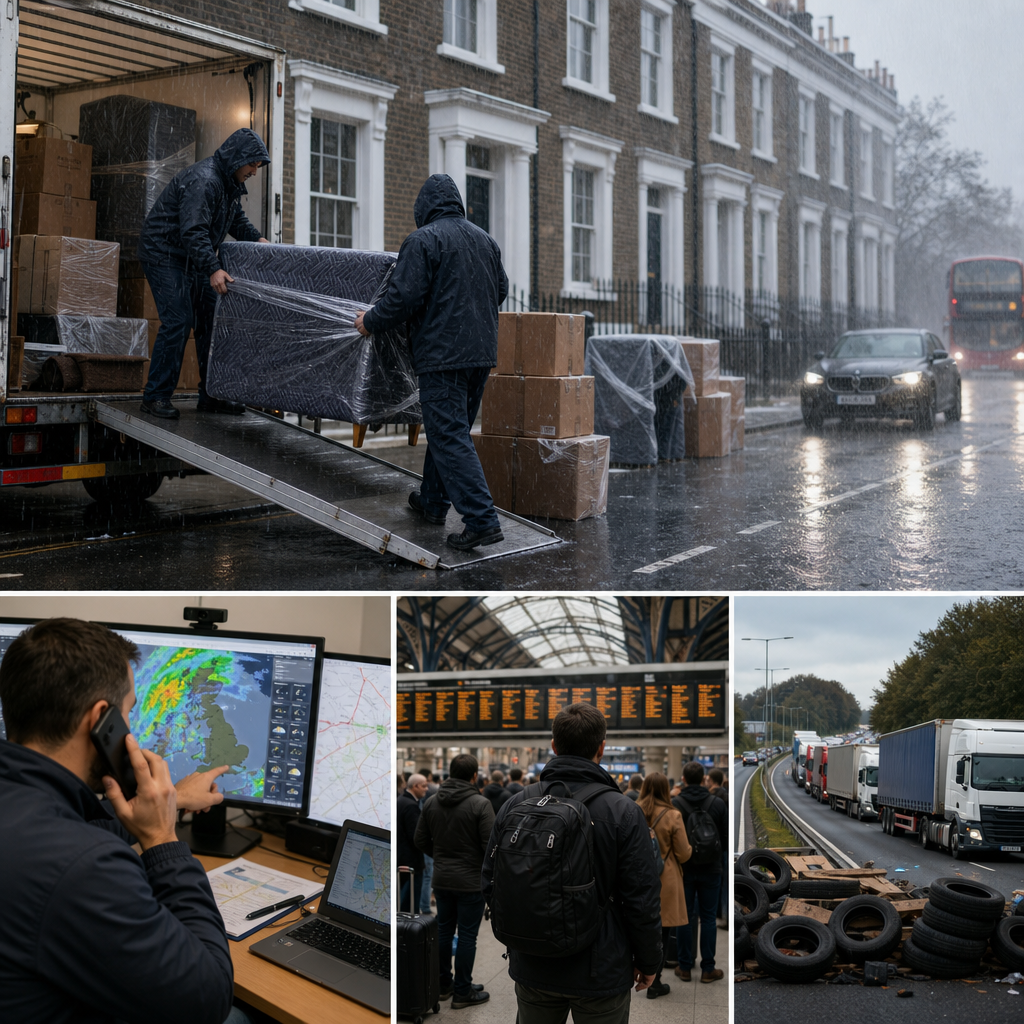
Emergency protocols handle genuinely disruptive situations. If a major strike affects your transport corridor or severe flooding closes key routes, we activate backup logistics partnerships, source alternative vehicles, or adjust move sequencing. This keeps your belongings moving forward even when normal operations face obstacles.
Building these layers requires advance relationships with backup transport providers, real-time monitoring systems, and staff trained to execute pivots smoothly. It’s the difference between a company that reacts to disruption and one that prevents it from derailing your move.
Real-Time Weather Monitoring and Route Adaptation
We monitor weather forecasts continuously from 48 hours before your move through completion. This isn’t casual glancing at the BBC forecast; we track multiple meteorological sources and maintain contact with our logistics partners about road conditions.
For moves scheduled during winter months or in areas prone to flooding, we identify three viable routes in advance. If our primary route becomes unsafe, we have alternatives ready without improvising. We also confirm vehicle suitability for conditions. In icy weather, we deploy vehicles with winter-grade tires and ensure drivers have cold-weather experience.
Rain protection is non-negotiable. Our standard approach includes weatherproof coverings for loaded vehicles, moisture barriers inside containers, and careful box placement that protects items from water intrusion. We also delay loading if conditions are severe enough to risk damage during the packing phase itself.
Our teams carry specialized equipment for adverse conditions: protective tarps, dehumidifiers for storage units, and anti-slip mats for loading areas. When wind speeds approach unsafe levels, we pause outdoor work rather than risk injuries or dropped items.
For international moves, we coordinate with partner logistics companies in destination countries to track weather conditions on their end. A move to Amsterdam faces different seasonal risks than one to Dubai. We adjust packing specifications, transport timing, and storage protocols accordingly.
What you should do now: if your move is scheduled for winter or during a season with unpredictable weather, discuss weather contingencies with your moving company. Ask specifically how they’ll protect your belongings and whether they have backup transport if primary routes become unsafe.
How We Navigate Transport Strikes Without Delays
Transport strikes create genuine logistical constraints, but advance visibility helps us protect your timeline.
We maintain subscriptions to labor relations monitoring services that track union activity across the UK and international transport sectors. This gives us early warning of potential strikes often weeks before they’re announced publicly. When we spot emerging strike risk, we alert clients promptly and begin adjusting schedules proactively.
Our backup strategy includes partnerships with independent transport providers outside the affected unions, relationships with alternative logistics chains, and flexible scheduling that absorbs timing shifts. If a rail strike affects our import timeline for international moves, we pivot to road transport or work with specialized freight partners who maintain alternative supply chains.
For moves scheduled during known strike periods, we offer two options: schedule around the strike if possible, or accept a slightly longer timeline with guaranteed protection against strike-related price spikes. We won’t charge you premium rates if a strike delays your delivery by a few days, as the delay isn’t your fault or choice.
Our team also maintains direct relationships with port authorities, customs brokers, and international logistics hubs. If a strike affects one facility, we can often reroute through alternative ports or customs checkpoints. This is particularly valuable for international relocations that depend on coordinated movement across multiple borders.
What you should do now: if your move occurs within two months of a scheduled or threatened transport strike, ask your moving company whether they have strike contingencies. Don’t accept vague reassurance; ask for specific backup plans.
Bank Holiday Scheduling: Planning Ahead With Quickshift Removals
Bank holidays represent predictable disruptions, yet many people treat them as surprises. Major UK bank holidays (Christmas, Easter, Summer Bank Holiday, and Spring Bank Holiday) reduce capacity across the entire moving and logistics sector.
We address this by opening our booking system strategically around bank holidays. Rather than pretending holidays don’t exist, we identify periods where we can maintain reliable service and periods where we recommend alternative timing. This transparency helps you make informed decisions rather than discovering capacity constraints at the last minute.
For clients whose moves must occur around a bank holiday (particularly international relocations with fixed timelines), we reserve dedicated team capacity in advance. This requires earlier booking but guarantees availability and prevents last-minute scheduling conflicts.

Our storage facilities remain accessible across bank holidays, which matters if your move spans a holiday period. You can access stored belongings even when traditional warehouses close, reducing pressure to complete everything within a tight window.
We also build longer buffer periods into moves scheduled near bank holidays. If you’re relocating to a new office just before the Christmas break, we schedule delivery a few days earlier to ensure your teams can settle in before the holidays. This prevents the scenario where your business lacks basic setup before a forced closure.
What you should do now: if your move falls within four weeks of a major bank holiday, confirm your moving company’s availability immediately. Don’t assume they can accommodate the exact dates you prefer; bank holiday availability fills fast.
Our Backup Transport and Equipment Solutions
Beyond planning, we maintain physical backup systems that activate when disruptions occur.
We own and maintain our own transport fleet rather than relying entirely on subcontractors. This gives us direct control over vehicles and scheduling. When strikes or weather affect external contractors, our own vehicles can often still operate. We also maintain relationships with vetted backup transport companies who can provide additional vehicles or capacity when our fleet reaches maximum utilization.
Our equipment inventory includes specialized gear for adverse conditions: weatherproof containers, commercial dehumidifiers, temperature-controlled transport for climate-sensitive items, and additional protective coverings. If weather forces us to implement enhanced protection protocols, we have the equipment ready rather than improvising with standard packing supplies.
Our storage facilities include climate control and redundant power systems. If severe weather causes power disruptions to facilities in an area, our backup generators maintain temperature and humidity control for your belongings. This prevents damage from freeze-thaw cycles or moisture accumulation during disruptions.
For international moves, we maintain partnerships with storage providers in major destination cities. If transport delays strand your belongings temporarily, we can hold them in secure, climate-controlled facilities abroad rather than leaving them in transit containers. This is particularly important for moves to Amsterdam and other European destinations where we have established relationships.
We also maintain a “loan equipment” program. If your move gets delayed and you need temporary furniture or equipment at your new location while your belongings are in transit, we can sometimes source short-term solutions through our network of moving and storage partners.
Communication Protocols During Disruptions
Anxiety during a disrupted move often stems from uncertainty. We address this with structured communication protocols.
Our standard approach includes a designated point person assigned to your move. That person has authority to make decisions about adjustments and communicate them directly to you rather than routing requests through a call center. You get direct contact details and can reach your point person during business hours without navigating phone trees.
For moves affected by disruptions, we escalate to twice-daily updates. You receive a morning brief on current conditions and expected progress, and an evening update on what happened that day and what we’re targeting tomorrow. This keeps you informed without expecting you to ask repeatedly.
We also provide real-time tracking for international moves. You can log into our system and see your container’s location, expected arrival dates, and any adjustments we’ve made. This transparency reduces anxiety significantly; you know where your belongings are rather than wondering.
Our 24/7 support team has authority to address immediate concerns even outside business hours. If a disruption occurs during evening hours and affects your move, you can reach someone immediately rather than waiting until morning. This matters particularly for international moves where disruptions might occur in different time zones.
We communicate worst-case scenarios proactively. If conditions might delay your delivery by a week, we tell you that possibility now rather than surprising you later. This lets you manage your own timeline (rescheduling contractors, notifying utilities, adjusting work schedules) rather than learning about delays reactively.
Protecting Your Belongings in Adverse Conditions
Contingency planning ultimately protects your belongings during the unpredictable moments when moves face external pressures.
Our packing protocols adapt to forecasted conditions. If heavy rain is expected, we use additional protective layers: moisture-absorbing packets inside boxes, waterproof wrapping for sensitive items, and careful placement that avoids water accumulation points. Electronics and documents get sealed in waterproof containers rather than standard cardboard boxes.

For moves in cold weather, we prevent freeze-thaw damage through climate-controlled transport. Items like paintings, leather furniture, and certain types of wine can be permanently damaged by freezing. We route these through temperature-controlled vehicles and storage rather than standard transport.
Our loading protocols include slope management: we ensure boxes are never stacked in ways that would cause them to shift if a vehicle brakes suddenly. During bad weather when driving conditions are more challenging, this becomes even more critical. We also secure items to prevent movement during wind gusts when vehicles are being loaded outdoors.
Storage during disruptions uses our climate-controlled facilities rather than temporary outdoor storage. If your move gets delayed and your belongings need temporary housing, we place them in our secure, climate-managed warehouses. This prevents damage from temperature swings or outdoor exposure.
For particularly valuable items (antiques, fine art, rare wine collections), we use specialized moving containers that maintain specific temperature and humidity ranges. This is standard practice for high-value international relocations and becomes especially important if disruptions extend timelines unexpectedly.
Why Our 24/7 Support Makes the Difference
The stress of a disrupted move peaks when you can’t reach anyone to answer questions or adjust plans. Our 24/7 support team isn’t there to transfer you endlessly; they’re empowered to help.
We staff our support line with people familiar with our operations, not generic call center staff. When you call about a weather-delayed move at 9 PM, the person answering understands our contingency processes and can explain what we’re doing about it. They can also authorize adjustments like accessing your stored belongings if you need something before delivery, or arranging temporary accommodation if delays create that need.
Our support team has direct connections to operational staff. If you call with a concern, they can reach our logistics managers in real time rather than taking a message and hoping someone gets back to you tomorrow. This responsiveness matters most when disruptions create time pressure.
We also use our support channels proactively. Rather than waiting for you to call worried, our team calls you if we identify a potential issue. We’d rather deliver news about a possible delay from our team than have you discover it when a driver fails to appear as scheduled.
For common questions about disruptions and contingencies, our moving FAQ resource answers many questions immediately without requiring contact with support.
Client Success Stories: Moves That Went Smoothly Despite Challenges
Real examples illustrate how contingency planning protects actual moves.
A family relocating from London to Edinburgh scheduled their move for late January, knowing weather risk was high. Three days before their move, a significant winter storm was forecast. Our team activated our secondary plan: we adjusted the route to avoid the most severely affected areas, deployed additional protective equipment for the family’s belongings, and confirmed that an alternative departure date was available if needed. The family decided to proceed as scheduled. Our adapted route added 90 minutes to travel time but kept the family safe and their belongings protected. They arrived on their preferred date with everything in good condition, and paid no premium for the weather adaptation.
A commercial client relocating their office across London had scheduled the move to span Easter weekend, unaware of capacity constraints. We identified the bank holiday conflict at the booking stage and recommended moving their timeline two days earlier. This allowed us to guarantee team availability and storage access throughout the transition. The office team had a full day after setup to prepare before the holiday closure, rather than scrambling if any unexpected delays occurred.
An international move to Amsterdam coordinated with a threatened transport strike in the UK. We provided early notice of the strike risk, discussed contingency options, and ultimately used our backup logistics partnerships to maintain the timeline. The client’s container departed on schedule despite strike-related delays affecting other freight. Proactive communication and backup systems meant the client never needed to adjust their lease start date or experience disruption.
These aren’t exceptional outcomes; they’re the results of treating contingency planning as integral to our service. By anticipating disruptions rather than reacting to them, we deliver moves on schedule with belongings protected, regardless of external challenges.
Moving Forward with Confidence
Disruptions happen. Weather systems form, strikes get announced, and holidays arrive on their regular schedules. The question isn’t whether you’ll face external pressures during your move; it’s whether your moving company has planned for them.
At QuickShift Removals, we view contingency planning as fundamental. We monitor conditions continuously, maintain backup systems, communicate transparently, and adjust proactively rather than reactively. This approach protects both your timeline and your belongings, giving you confidence that your move will succeed regardless of the obstacles the UK weather or labor market might present.
When you’re ready to discuss your move and the specific disruptions that might affect it, our solutions page outlines how we can customize a plan for your situation. We’re here to handle the unpredictable so you can focus on settling into your new space.