Why Moving to France from London Requires Professional Support
Relocating from London to France is an exciting opportunity, but it brings layers of complexity that domestic moves simply don’t involve. Border crossings, customs regulations, different logistics networks, and language barriers all demand careful planning and specialist expertise. At Quickshift Removals, we’ve guided hundreds of families and businesses through this journey, and we understand exactly what makes France-bound moves different from moving across London.
This guide walks you through every phase of your international relocation, from packing your belongings to clearing customs and settling into your new French home or office.
Moving internationally isn’t just a bigger version of a local house move. When you cross the Channel, you’re entering a different regulatory environment, different customs systems, and a different logistics infrastructure. Attempting to coordinate this yourself can lead to delays, unexpected costs, and lost or damaged goods.
We handle the complexity so you don’t have to. Our experience with London-to-France relocations means we know the specific requirements that apply to your move, the carriers that work best on this route, and the documentation that French customs officers expect to see. We’ve built relationships with reliable European transport partners and understand the timing windows that make cross-Channel moves efficient.
Beyond logistics, there’s the human element. Moving internationally is stressful. You’re managing a home sale or rental handover in London, securing accommodation in France, and often navigating new employment or visa requirements simultaneously. Our 24/7 support team acts as your single point of contact throughout this process, answering questions in real time rather than leaving you wondering about your belongings mid-journey.
What to do next: Start by noting what you’re moving (furniture, household goods, vehicles, valuables), as this determines which services you’ll need and helps us plan the most cost-effective approach.
Understanding the Unique Challenges of London to France Relocations
France has specific customs rules, import duties on certain goods, and requirements for vehicle registration and pet relocation. The Channel crossing itself introduces timing variables: ferries and the Channel Tunnel both have schedules, weather can affect transport windows, and paperwork processing takes time at both borders.
Several challenges commonly catch people off guard:
Customs and import duties. Not all household items can move duty-free into France. While personal effects generally qualify for relief, the rules depend on whether you’re relocating permanently or temporarily, whether you’ve owned items for over six months, and what category they fall into. Electronics, vehicles, and luxury goods sometimes attract duty.
Pet relocation. If you’re bringing pets, France requires specific health documentation, microchipping, and rabies vaccination records. The process takes weeks to arrange properly, and missing deadlines can prevent your pet traveling on your planned date.
Vehicle registration. French number plates and registration documents work differently from UK ones. You’ll need to follow French procedures to re-register your vehicle, which involves paperwork at the prefecture and sometimes adjustments to your vehicle itself.
Storage and timing gaps. If your French accommodation isn’t ready when you’re leaving London, you’ll need somewhere secure to store your belongings. Many people underestimate how long this transition can take.
Language and bureaucracy. French administrative processes require documentation in French, and penalties for incorrect filing can delay your move by weeks.
We manage these obstacles as part of our standard service. Our team liaises with French customs brokers, coordinates pet documentation through licensed veterinarians, and ensures your vehicle and household goods meet import requirements before they leave UK soil.
What to do next: Make a detailed inventory of what you’re moving, noting any pets, vehicles, or high-value items, as these require separate handling and planning.
Our International Relocation Process for France Moves
Our France relocation process follows a structured approach designed to eliminate surprises and keep your move on track.
Initial consultation and assessment. We start by understanding your timeline, destination region in France, and what you’re moving. This conversation determines which services you need, helps us identify potential obstacles early, and lets us provide an accurate quote. We discuss your departure and arrival dates, whether you need interim storage, and whether any items require specialist packing.
Detailed planning and documentation. Our team then prepares a bespoke moving plan specific to your circumstances. We arrange any necessary customs documentation, coordinate with French partners if needed, and create a timeline that accounts for all the variables involved. We also advise on what you can take duty-free, what might incur costs, and whether anything shouldn’t travel at all.
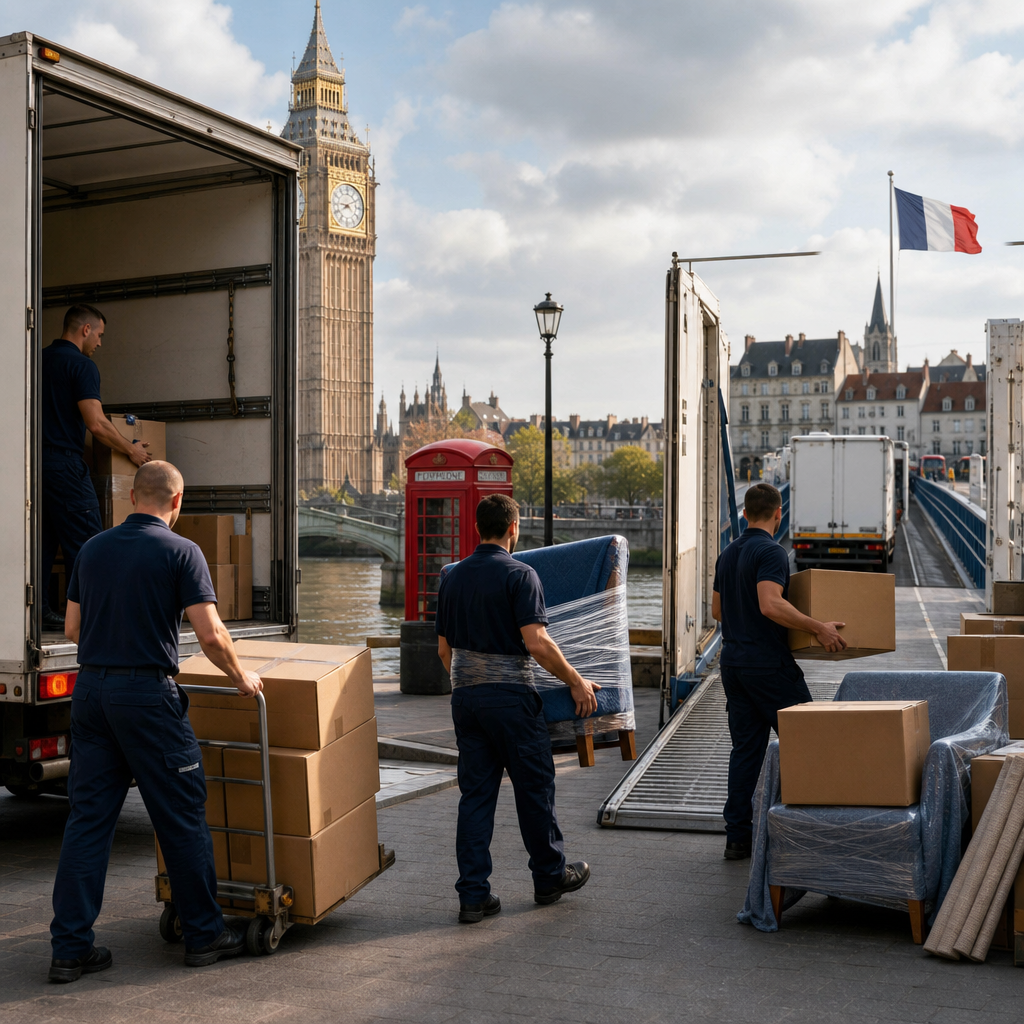
Professional packing and preparation. Our packers use materials and techniques suited to international transport. International moves face more movement, different climate conditions, and longer journeys than UK moves, so we pack accordingly. Fragile items get extra protection, and we label everything clearly with both English and French descriptions for customs purposes.
Transport coordination. We arrange the logistics from your London address through to your French destination. This involves loading at your property, transport to the Channel crossing, coordination through the crossing itself, and delivery to your French address. We track your shipment throughout and keep you informed of progress.
Customs clearance and delivery. Our partnership with customs brokers means documentation is prepared correctly and submitted in advance. When your shipment arrives at the French border, the clearance process is streamlined. We then arrange final delivery to your new address, often coordinating timing with your arrival so you can receive items when you’re ready.
Our relocation solutions are tailored to international moves, so every step accounts for cross-border requirements rather than treating your move as a standard domestic relocation.
What to do next: Contact us for an initial consultation with details of your move (postcode in London, destination region or town in France, moving date, and approximate volume of goods).
Secure Packing and Transport Solutions for Cross-Channel Moves
Packing for an international move requires a different approach than domestic packing. Your belongings will spend longer in transit, experience different handling at the Channel crossing, and be stored temporarily in different climates and storage facilities.
We use robust packing materials suited to international transport: heavy-duty boxes, corrugated board dividers, bubble wrap, and protective foam. Furniture gets padded wrapping and corner guards. Fragile items like dishes, glassware, and artwork receive compartmentalized packing with extra cushioning. Electronics get anti-static wrapping and secure boxing to prevent damage from vibration during transport.
Our team also prepares an inventory document that serves two purposes: it helps French customs officials verify what’s in your shipment, and it protects you if any items are lost or damaged. Each box is numbered, photographed, and documented so there’s a clear record of condition before transport.
For larger items like piano, antique furniture, or valuable artwork, we offer specialist packing services. These items get custom crating, specialized wrapping, and sometimes individual transport arrangements to ensure they arrive in perfect condition.
Temperature and humidity control matter on international moves. We don’t simply load items into a standard container. Our transport partners use climate-controlled vehicles for sensitive goods like electronics, antiques, or items prone to warping (wood furniture, musical instruments). This adds modest cost but prevents damage that would cost far more to repair or replace.
Throughout transport, your shipment is fully insured. This covers damage, loss, or theft, giving you complete peace of mind from collection until final delivery.
What to do next: When getting a quote, mention any particularly fragile, valuable, or specialist items so we can factor in appropriate packing solutions and insurance coverage.
Customs Documentation and Logistics We Handle for You
This is where professional support makes the biggest difference. Customs paperwork is complex, and errors can result in delays, additional charges, or items being held at the border.
We prepare several key documents on your behalf:
Movement Certificate or customs inventory. This itemizes everything in your shipment with descriptions, approximate values, and harmonized commodity codes. French customs need this to verify that items meet duty relief criteria.
Import declaration forms. We complete these in the correct French format and submit them in advance of your shipment’s arrival. This speeds up the clearance process at the border.
Certificates of origin and authenticity. For certain goods, especially vehicles or high-value items, we secure documentation proving origin and ownership. This is essential for duty assessment.
Temporary import documentation. If you’re relocating temporarily rather than permanently, we arrange the proper documentation to ensure items can leave France again without incurring permanent import duty.
We also manage communication with French customs brokers at the point of entry. They handle the formal customs clearance, ensuring all paperwork is in order and coordinating any inspections if required. This partnership means your shipment clears borders faster and with fewer complications.
Vehicle relocation deserves specific mention. We arrange for your UK-registered vehicle to be transported, but French registration requires separate steps. We can advise on whether to re-register in France or arrange international vehicle documentation if you’re keeping UK registration temporarily. We also ensure your vehicle meets French emissions and safety standards, as older UK vehicles sometimes need adjustments.

What to do next: Compile a complete list of vehicle registrations, pet passports, and any high-value items or antiques you’re moving, as these require advance documentation planning.
Storage Options During Your Transition Period
Real life rarely synchronizes perfectly. Your London property might sell before your French one is ready, or you might want to leave London earlier than you can access your new French address. This is where secure interim storage solves a major logistical puzzle.
We operate secure storage facilities in both London and, through our European network, access to storage in France itself. Your goods are held in climate-controlled units with 24/7 security, CCTV monitoring, and fire suppression systems. You pay only for the storage period you actually need, with no hidden charges or minimum commitments beyond what’s necessary.
Storage is particularly useful if you’re selling your London home with a completion date that doesn’t align with your France move. Instead of coordinating a complex moving date around your transaction timeline, you can move items into storage, complete your sale, and then arrange final transport to France on your schedule.
Some clients use storage for a different reason: they want to trial living in France before committing to their full move. They might rent a small apartment initially, store the bulk of their belongings, and then arrange final delivery once they’ve found their permanent French address or completed renovations.
Storage also creates flexibility if you’re shipping items gradually rather than all at once. Some furniture might arrive in the first shipment, while artwork or seasonal items come later. Storage bridges these gaps without cluttering your new space.
Our removals and storage solutions are designed around your actual timeline, not around standard moving schedules.
What to do next: If your moving dates have any gaps or uncertainties, let us know during consultation so we can include storage costs in your quote and avoid surprises later.
How Our 24/7 Support Guides You Through Every Step
International moves introduce variables that can cause stress during weekends or after standard business hours. We operate 24/7 customer support because moving doesn’t wait for office hours, and your questions shouldn’t either.
This means if your shipment is delayed at the Channel crossing on a Saturday morning, or if you arrive at your French address and have a question about an inventory list, you can reach us immediately. Our team has real-time access to tracking information, can coordinate with transport partners across time zones, and can make decisions quickly when timing matters.
We also proactively communicate. Rather than leaving you wondering about progress, we update you at key milestones: when your items are collected from London, when they’re prepared for the Channel crossing, when they clear customs in France, and when they’re out for final delivery. You’ll know what’s happening and when to expect your belongings.
For specific questions about customs, pet documentation, vehicle registration, or anything else related to your move, our team can provide guidance based on our experience with hundreds of France relocations. If a situation falls outside our expertise, we know which French authorities or specialists to consult and can guide you through the process.
This support reduces the anxiety that often accompanies international moves. You’re not navigating French bureaucracy or Channel logistics alone; you have a dedicated team familiar with exactly these situations.
What to do next: When you get in touch, ask about our communication preferences and confirm the best times and methods to reach us during your move.
Planning Your Timeline: From London Departure to France Arrival
An effective France relocation timeline accounts for several dependent activities that can’t happen simultaneously. Understanding this sequencing helps you plan your own affairs (notice on your London rental, school applications in France, employment start dates) around your moving schedule.
Eight to twelve weeks before departure: Initial consultation, quote, and booking. We secure your moving date and begin planning. You arrange your French accommodation, start notifying employers and schools, and organize pet documentation if needed. This is when we identify any items that need specialist handling or customs complications.
Six to eight weeks before departure: Detailed planning with our team. You sell or give away items you’re not taking, arrange your London property handover, and finalize French accommodation details. We prepare customs documentation and coordinate with our European transport partners.
Four weeks before departure: We confirm your packing schedule, finalize your inventory, and arrange any storage needed. You arrange UK utility disconnections and French utility connections. Pet documentation should be nearly complete, and French vehicle registration should be in progress.

Two weeks before departure: We conduct a final property survey to assess access, parking, and any special handling needed for large items. You complete removals of any items you’re not taking and prepare London utilities and services for disconnection. Vehicle documentation should be finalized.
One week before departure: We schedule collection at your London property. You confirm your arrival date in France and arrange anyone to receive your shipment if you’re not immediately available. Final confirmations happen with our team about exact timing and contact details.
During transport (typically 5-10 days): Your items travel from London through the Channel crossing to France. You’re kept informed of progress. This is when you physically relocate, manage the UK property handover, and handle initial settlement in France.
Upon arrival in France: We deliver your items, often coordinating with you to ensure someone is available. You verify items against the inventory, report any damage or issues immediately, and begin unpacking and settling in.
This timeline is flexible based on your circumstances. Some people need longer, some shorter. The key is building in buffer time for customs processing and accounting for variables like ferry schedules or French accommodation readiness.
What to do next: Work backward from your target France arrival date to determine when you need to contact us for a quote and confirm your moving date.
Cost-Effective Services That Simplify International Moving
Cost concerns often drive people toward DIY international moves or unregulated transport services. These almost always cost more in the end through damage, delays, customs fines, or the time you waste coordinating logistics yourself.
Our pricing is transparent. We quote based on the actual volume and weight of your goods, the level of packing required, any specialist items, customs documentation complexity, and whether you need interim storage. There are no hidden charges added mid-move. You know what you’re paying and why.
Several factors make our service cost-effective:
Efficient route planning. We consolidate shipments when possible, meaning if multiple clients are moving to the same French region within a similar timeframe, we coordinate transport to reduce fuel and handling costs. This saving passes to you.
Established carrier relationships. Years of partnership with reliable European transport companies mean we negotiate favorable rates that reflect our volume and reliability as partners. This is harder for individual shippers to achieve.
Customs efficiency. When documentation is prepared correctly and submitted in advance, clearance happens faster and without delays that increase storage costs at the border. Poorly prepared shipments can sit in customs for days, accumulating charges.
Damage prevention. Proper packing costs upfront but prevents expensive damage claims that cost far more. A broken heirloom or damaged furniture piece can’t be unbroken; proper packing prevents this entirely.
Time savings. The cost of our service is often offset by the time you save not coordinating transport yourself, chasing customs documentation, or managing multiple vendors across two countries.
Get a quote for your specific move. We’ll provide a detailed estimate that shows you exactly what you’re paying for and why it represents good value for a complex international move.
What to do next: Gather details about your move volume (rough square footage of goods), your London address, your destination region in France, and your timeline, then request a quote.
Getting Started with Your France Relocation Today
Moving from London to France is manageable when you have the right partner. Our process is designed around your specific circumstances, and we handle every international logistics component so you can focus on the exciting part: starting your new chapter in France.
Begin by contacting us with basic details: where you are in London, where you’re heading in France, roughly when you want to move, and what you’re taking. We’ll schedule an initial consultation to understand your specific needs, identify any complications early, and provide a quote without obligation.
For specific questions about our services, check our moving FAQs or reach out directly. We’re here to make your international relocation as straightforward as possible.
Your move to France deserves professional coordination. We’ve guided hundreds of families and businesses through this process, and we’re ready to guide you too.